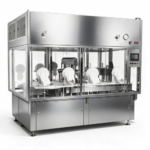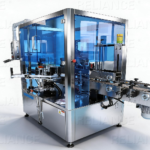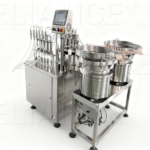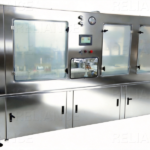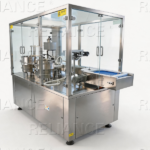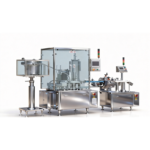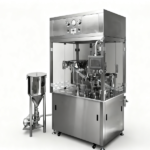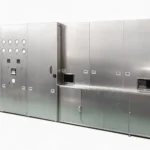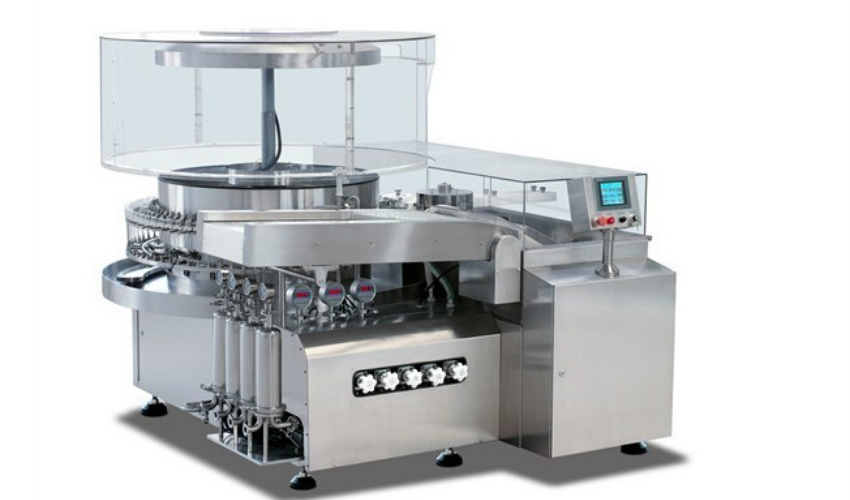

Amber Glass Dropper Bottle Washing Machine
Request a Quote
Enter the quantity you need and add to your quote list for pricing inquiries.
DESCRIPTION
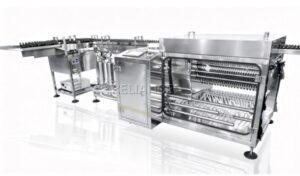
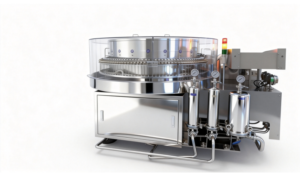
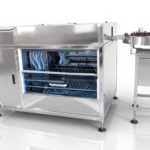
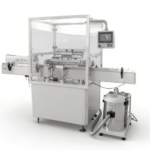
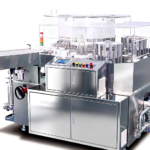
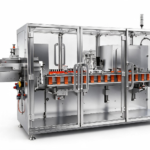
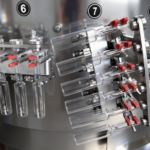
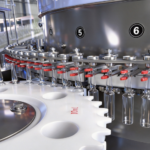
The machine adopts a continuous rotary washing system with precision neck-gripping technology, allowing ampoules to be inverted and cleaned through multiple washing stages. Using purified water, WFI (Water for Injection), and sterile compressed air, the system effectively removes particles, glass residues, dust, and contaminants from container surfaces.
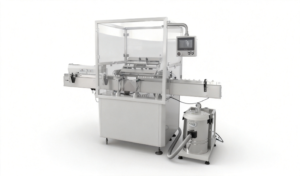
Designed with GMP-oriented construction, stainless steel materials, and flexible process configuration, the automatic rotary ampoule washing machine can be customized according to container size, production speed, and sterile filling line requirements.
SPECIFICATION
| Parameter | RWB-60 | RWB-100 | RWB-120 |
| Number of Gripper | 60 | 100 | 120 |
| Output (Vials/min): 10ml | 180~200 | 400 | 500 |
| Installed Power | 220/380V, 50/60Hz, 16kW | ||
| Main Drive | 0.75kW | ||
| Heater (Option) | 9kW | ||
| Washing Fluid Consumption | 10 L/min | 12 L/min | 15 L/min |
| Washing Fluid Temperature | 50~60℃ | ||
| Washing Fluid Pressure | 1.5~2 kg/cm² | ||
| Compressor Air Consumption | 35 L/min | ||
| Compressor Air Pressure | 3~5 kg/cm² | ||
| Length | 1950 mm | 3200 mm | 3200 mm |
| Width | 1900 mm | 2280 mm | 2280 mm |
| Height | 1750 mm | 1570 mm | 1570 mm |
| Weight | 2000 kg | 2200 kg | 2500 kg |
FAQ

Q1: What is a rotary ampoule washing machine used for?
A1: A rotary ampoule washing machine is used to automatically clean the internal and external surfaces of pharmaceutical glass ampoules before sterile filling. It removes particles, dust, and residues to improve container cleanliness.
Q2: How does a high-speed ampoule washing machine work?
A2: The machine automatically transfers ampoules through a rotary system, grips them by the neck, inverts them, and performs internal washing and air drying using controlled cleaning media.
Q3: What cleaning media are used in pharmaceutical ampoule washing?
A3: The machine can use purified water, WFI, and sterile compressed air according to the validated cleaning process and pharmaceutical production requirements.
Q4: Can the ampoule washer handle different ampoule sizes?
A4: Yes. The machine can be customized with change parts to support different glass ampoule dimensions, production speeds, and filling line configurations.
Q5: Is the rotary ampoule washing machine suitable for sterile filling lines?
A5: Yes. The machine is designed for pharmaceutical sterile production and can be integrated with depyrogenation tunnels, filling machines, and sealing systems for complete aseptic processing lines.
FEATURE
1. High-Speed Rotary Washing Technology
The machine adopts a continuous rotary design with automatic ampoule transfer, positioning, inversion, washing, and discharge. The neck-gripping system minimizes contact with the ampoule body and provides stable handling during the cleaning process.
2. Complete Internal and External Cleaning
The washing system is designed to clean both the inside and outside surfaces of glass ampoules.
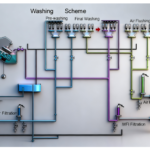
Recycled water pre-washing
Purified water washing
WFI final rinsing
Sterile compressed air drying
3. GMP Hygienic Design
Stainless steel construction for pharmaceutical environments
SS316L material for product-contact and washing media components
Smooth surfaces for easy cleaning
Reduced particle generation
Suitable for integration with sterile filling lines
4. Flexible Process Configuration
Different washing stations
Ultrasonic pre-washing system
Multiple cleaning media circuits
WFI washing system
Sterile air drying system
Customized change parts for different ampoule sizes
5. Easy Integration with Sterile Filling Lines
Depyrogenation tunnel
Sterile filling machine
Stoppering and sealing system
QUALIFICATION
Sterile pharmaceutical preparations as injections are filled in glass vials. These vials should be cleaned properly before filling. Automatic vial washing machines are used to clean, but the process of cleaning the vials should be validated. The efficiency of these machines is verified by the following tests.
1.Chloride Content Test:
A 30% solution of sodium chloride is prepared in water. 10 containers or vials are spiked with 0.1 mL of this sodium chloride solution. Containers are swirled to coat the inner surface and evaporate the solution to dryness atroom temperature. Spiked test containers are marked in series with a permanent marker on the outer surface.
2.Particulate Matter Test:
10 gm of charcoal is dissolved to make 1% charcoal slurry. Approximately0.1 ml of charcoal slurry is used to spike each of 10 containers by swirling the container to coat the inner surface and evaporate the solution to dryness at room temperature. Spiked test containers with charcoal are marked in series with a permanent marker on the outer surface.
3.Bacterial Endotoxin Test:
Add 100 endotoxin units into 10 vials and allow them to dry at 45 – 50°C. Mark these spiked vials with permanent marker on the outer surface.
Separate 10 containers are used for each of the above tests
4.Procedure:
About 3000 vials of the selected size are loaded on the feed belt, and vial washing machine is operated as per the standard operating procedure. Place the spiked vials marked with a permanent marker in between the other vials while the machine is running. These vials should be placed at the initial, middle, and end of the washing session. Collect the marked vials after washing and store properly to avoid theother contamination from the environment. These spiked vials are analyzed separately. it should be done three times for each vial size.
5.Acceptance Criteria:
Sodium chloride content should be absent in any of the spiked vials.
Vials should be free from foreign particles & fibers on visual inspection. 10u particles should not be more than 25, and 25u particles should not be more than 3. Vials should comply with the endotoxin limit i.e 0.25 EU/vial.