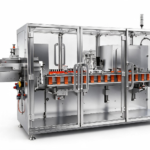
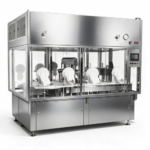
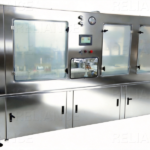
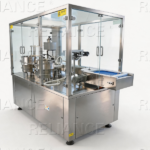
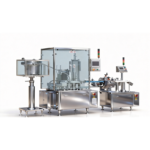
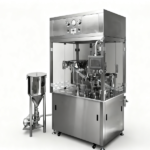
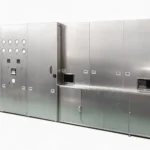
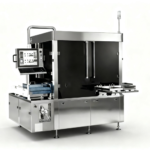
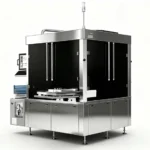
Glass Bottle Air Drying Machine
Request a Quote
Enter the quantity you need and add to your quote list for pricing inquiries.
DESCRIPTION
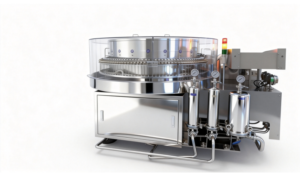
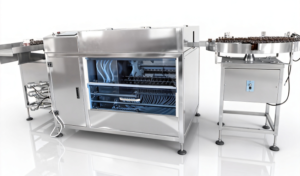
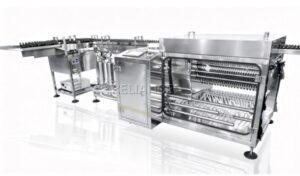
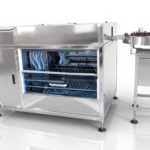
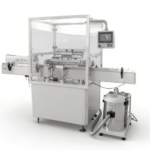
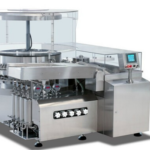
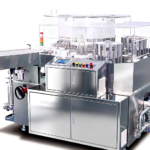
The Pharma Glass Bottle Surface Air Jet Washing Drying Machine is designed for efficient cleaning and drying of external bottle surfaces before labeling, inspection, or secondary packaging processes. Using filtered compressed air technology, the system removes residual liquid droplets, dust, and surface contaminants from glass containers without water consumption.
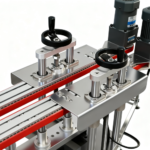
Designed for pharmaceutical and healthcare packaging applications, the machine features stainless steel construction, adjustable air flow control, and flexible integration with automatic production lines. It is suitable for various glass bottles, vials, and containers, helping improve packaging quality, production efficiency, and clean manufacturing standards. The system can be customized according to bottle size, line speed, and specific process requirements.
SPECIFICATION
1.Applicable all kinds and shapes of bottles and containers
2. Output: 50 – 150 bottles/min
3. Motor: 12KW
4. Dia of bottle: 30 mm – 140 mm
5. Height of bottle: 50 – 350 mm
6. Overall dimensions: 3000 x 1000 x1600 (mm) (LxWxH)
7. Total weight: about 100kg
FAQ
Q1: What is a glass bottle air jet cleaning machine used for?
A: It is used to remove water droplets, dust, and surface residues from pharmaceutical glass bottles after washing or before labeling and inspection. It helps maintain clean and dry container surfaces during production.
Q2: How does the air drying system remove moisture from bottle surfaces?
A: The machine uses filtered compressed air with adjustable airflow nozzles to blow away residual liquid and particles, providing fast and efficient surface drying without additional water consumption.
Q3: Can this machine be integrated into an existing pharmaceutical packaging line?
A: Yes. The system can be connected with bottle washing machines, inspection systems, labeling machines, and other packaging equipment according to production line requirements.
Q4: What types of bottles can be processed by this equipment?
A: The machine can be customized for different glass containers, including pharmaceutical bottles, vials, ampoules, and other small-volume packaging formats.
Q5: What are the main benefits of using an air jet drying system?
A: It improves container appearance, reduces manual handling, supports continuous production, and provides a clean drying solution with lower water usage and easy maintenance.
WORKING PRINCPLE
It enters the low-temperature fan through the air filter, and the air is compressed and enters the air knife through the pipe. A strong wind belt is formed at the air duct entrance, and the water droplets and water film on the bottle wall are forced to dry from different directions at high speed. The air knife can be rotated in up, down, left, and right directions to adjust the blowing area as needed, and is easy to operate. This machine uses an imported fan with low noise and large air volume.
FEATURE
1) It is suitable for all kinds of special-shaped bottles and standard bottles. It has stable performance, good blowing effect, no dust pollution caused by brushes, simple operation, maintenance-free, low energy consumption and no wearing parts. It is currently the ideal drying equipment.
2) The machine overcomes the situation that the original dryer brush is seriously worn, frequently replaced and the bottle is easily poured, and there is no dust pollution caused by the brush.
3) The machine has the advantages of automatic silencers, air purification, energy saving, and environmental protection.
4) The spider air nozzle type air knife is specially designed for drying the water on the surface of various round bottles and shaped bottles, It uses a custom-made universal joint nozzle to adjust the angle according to the shape of the bottle, and blow dry several times from top to bottom to ensure that the entire bottles are dried 360 degrees without dead corners and no moisture residue, to achieve the maximum drying effect and power saving effect.