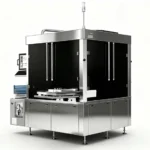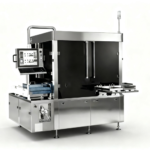
RVI Sterile Pharma Vials Liquid Level Visual Inspection System
Request a Quote
Enter the quantity you need and add to your quote list for pricing inquiries.
DESCRIPTION
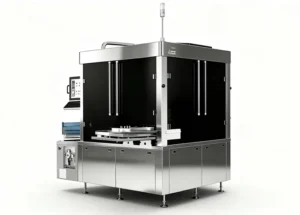
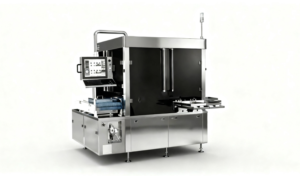
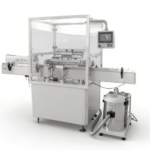
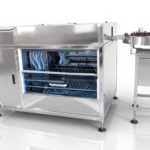
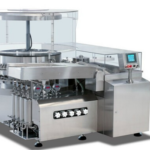
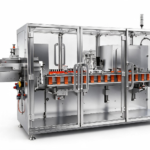
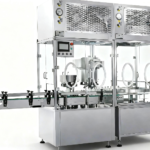
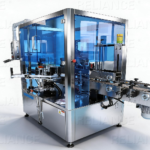
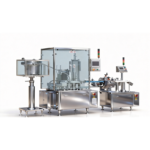
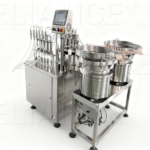
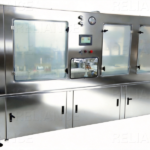
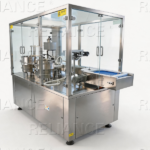
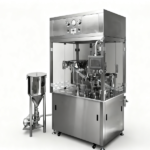
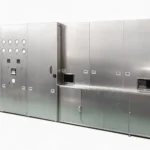
The Probiotic Monoblock Dropper Bottle Filling Capping Machine is designed for automatic filling and sealing of probiotic liquids, nutritional supplements, and healthcare products in amber glass dropper bottles. Integrating bottle handling, precision liquid filling, dropper sorting and insertion, and capping all in one compact system, it provides stable operation, high dosing accuracy, and consistent sealing performance. With GMP-oriented hygienic design and flexible customization options, the machine is suitable for probiotic, vitamin, and nutraceutical liquid production lines requiring efficient and reliable small bottle packaging solutions. Pharma BFS Plastic Container Vision Inspection Machine is designed for automated quality inspection of Blow-Fill-Seal (BFS) plastic containers used in pharmaceutical manufacturing. Equipped with industrial cameras, specialized lighting, and intelligent vision inspection software, the system can be configured to detect visible foreign particles, plastic residues, container deformation, filling-level deviations, and sealing-area defects, depending on the product and inspection setup. Its high-speed inspection technology supports real-time image processing, automatic rejection of defective containers, and production data monitoring. The user-friendly HMI allows operators to manage inspection recipes, adjust parameters, and review inspection results. Customized configurations are available for different BFS ampoule formats, container geometries, and production speeds, helping pharmaceutical manufacturers improve inspection consistency and packaging quality.
Quality control of Pharma BFS Cards
- Cosmetic inspection
- Particles Detection Reflecting & Non-Reflecting
- Fill Level Check (Short Wave Infra-Red Optional)
- Tab OCR/OCV verification (Optional)
SPECIFICATION
| Item | Specs |
| Speed | 0–120 Plate /Min |
| Application | Length 0–200mm / W: 0–30mm / H: 0–130mm |
| Inspection Items | Black spots, cilia (fine fibers), foreign matter, fill level, empty bottles, burrs, deformation, tail-end defects, etc. |
| Material | BFS Containers |
| Power | 3.2 kW, 220V, 50Hz |
| Air Consumption | 20 m³/h |
| Weight | 1600 kg |
| Dimension | 4215 × 1150 × 2150 mm |
FAQ
1. What defects can a BFS plastic container vision inspection machine detect?
An automatic BFS vision inspection machine can be configured to detect visible foreign particles, black spots, plastic residues, container deformation, cosmetic defects, and filling-level deviations. Depending on the container design and inspection configuration, it may also inspect sealing areas and other critical features. Actual detection capability should be verified using representative products and defect samples.
2. Can a BFS vision inspection machine inspect multiple plastic ampoules at high speed?
Yes. High-speed BFS inspection systems can be designed to inspect individual containers or multi-ampoule strips. Multiple industrial cameras, synchronized handling stations, and real-time image processing help maintain inspection throughput. The achievable speed depends on the number of containers per strip, container geometry, defect criteria, and required detection performance.
3. How does the camera inspection system detect defects in BFS plastic containers?
The system captures images using industrial cameras and specialized lighting, then analyzes them using image-processing software and predefined inspection algorithms. Different camera views and lighting conditions can be used to inspect container surfaces, fill levels, sealing areas, and visible foreign objects. The inspection setup must be optimized for the plastic material, container shape, and product characteristics.
4. Can the BFS vision inspection machine automatically reject defective containers?
Yes. The machine can be integrated with an automatic rejection mechanism that separates containers classified as defective from accepted products. Rejection tracking and inspection statistics may also be included, depending on the configuration. The rejection function should be challenged during qualification to verify that defective containers are consistently identified and removed.
5. Does a pharmaceutical BFS vision inspection machine support GMP documentation and 21 CFR Part 11 requirements?
The machine can be configured to support pharmaceutical quality systems through inspection recipes, user access controls, inspection records, defect statistics, and optional audit trails. However, 21 CFR Part 11 compliance is not automatic. It depends on the implemented electronic records and signatures, system configuration, supplier documentation, and the user's validation of the complete system for its intended use.
FEATURE
1. 6-Station / 14-Camera Panoramic Imaging
6 inspection stations equipped with 14 five-megapixel cameras, covering all critical areas of the container.
Optional 45° tilted inspection station for enhanced precision in identifying details such as corners, nozzles, and tail sections.
Customized lighting arrays (ring, side, and transillumination) to optimize contrast for the detection of various types of defects.
2. Precision Motion Control System
Features a UK-based Trio servo system and precision ball screws, achieving a positioning accuracy of ±0.02mm.
PC-based control architecture supporting variable-speed operation, point-to-point positioning, and coordinated motion modes.
Seamless integration with existing production lines.
3. AI-Driven Intelligent Inspection System
Hybrid vision algorithms combining rule-based detection with deep learning models for superior accuracy.
Capable of detecting over 10 categories of defects, including:
Black spots/foreign matter
Burrs/rough edges
Molding defects and deformed tail sections
Empty containers, underfilling, or overfilling
Nozzle deformation, surface contamination, etc.
Extremely low false-alarm rate (<0.1%), ensuring high inspection reliability.
4. Efficient Rejection and Multi-Channel Sorting
Automatic rejection of defective products via high-speed air blasts or mechanical grippers.
Supports multi-channel sorting based on defect type, facilitating sampling, statistical analysis, or rework processes.
5. Data Management and Traceability
All images, results, and timestamps are uploaded to local or cloud storage; compliant with GMP and 21 CFR Part 11 audit requirements.
Automatic generation of inspection reports for trend analysis and quality tracking.
6. Hygienic, Modular Design
Stainless steel enclosure with IP65-rated industrial components, meeting cleanroom requirements for pharmaceutical manufacturing.
Quick-release camera mounts and tool-free module replacement for efficient maintenance.
Modular layout facilitates future upgrades and customization.
7. Intuitive, User-Friendly Interface
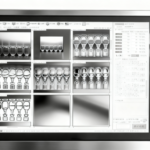
15-inch multi-language touchscreen HMI. Configurable sensitivity levels, recipe switching, and tiered user access permissions.
Guided changeover process, simplifying transitions between different BFS (Blow-Fill-Seal) product specifications.